

Social media platforms are constantly evolving, making it challenging for brands (let alone marketers) to keep up with their audiences’ demand for fast-moving, frequent, quality content that breaks through the noise. It is apparent that social media enables marketers to bridge the gap between diffusion-centric mass media and participatory interventions. We live in an instantaneous globalized society. Today the world is using the internet to create and share information at a faster rate than ever before. Globalization has facilitated the advancement of citizen being able to resource the best information, for the best product or service, for the best price.
Okurt is a social media networking sight launched in 2004 and shut down in 2014. Its ten-year stretch was marked by over 3 million invite only communities (Okurt 2018). Okurt was commonly used in India and Brazil.But why shut down a sight so appealing? The answer: each market is different. Okurt was defined by their success within the Brazilian market based on the following four factors:
- Brazil has banned outdoor advertising, creating a surge in online advertising.
- Brazil is the 5th largest online market in the world.
- Brazil’s culture has a high affinity for technology, and cell phones actually outnumber people.
- A total of 77% of Brazilian social media users have a positive attitude towards online marketing and 80% of the population use social media to research products
In my opinion, the invite only aspect truly created a sense of community. Individuals enjoy being apart of a community and seek a sense of belonging (Mahoney & Tang 2018). On the other hand, this feature also limited the likeability and appeal for those who were not accepted to be apart of the community. This site proved to be a popularity contest. Friends could rate other users by how sexy, cool and trust worthy they are (Mahoney & Tang, 2018, p. 192). Okurt begin to have a superficial presence in a sense. They strayed away from what Okurt was designed to do-help users meet new and old friends and maintain existing relationships.
Facebook was also invented in the year 2004. Other markets were perhaps not introduced to this networking app due to other countries marketing restrictions. Other social media sights significantly outpaced the growth of Okurt by 2014. Okurt was also lacking in the single most important aspect, functionality. The interface plays an vital role in bringing high volume traffic to a website (Paunovic 2018).
Internet has emerged as a one-stop source of entertainment, information, social interaction and commerce. For success in any online business, a user friendly website is a must because it will provide an enhanced user experience to the millions of online visitors. Any site that is too complex and difficult will push away online traffic. Okurt users experienced issues such as blockages, limited number of friends, and difficulties uploading media content.
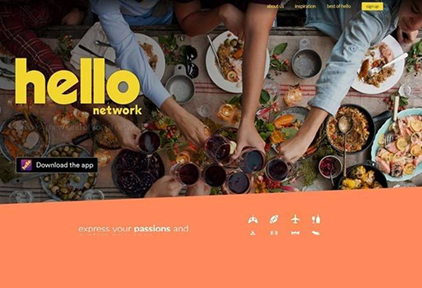
Okurt has now rebranded into Hello. Hello is a nice way to rebrand and maintain the Brazilian market which they are currently excelling in. “If you look at social media today, it has isolated people instead of bringing them closer. It has become more about broadcasting than sharing. We need a fresh start. Hello is built around interest-based communities where users with same interests can connect, leading to true connections,” says Okurt Buyukkokten. Okurt also mentioned that with hello, the goal is to create positive, meaningful, authentic connections and sustained social engagement. Upon signing up from Hello, users are asked which five things are they most passionate about. This is actually refreshing and advantageous considering Facebook’s recent security breech.
Resources: Artversion. (2018, August 15). The Importance of User Interface Design – Web Design. Retrieved February 12, 2019, from https://artversion.com/blog/importance-of-user-interface-design/Delhi. (2018, April 11). Orkut founder launches ‘Hello’ social networking app. Retrieved February 17, 2019, from https://www.businesstoday.in/technology/launch/orkut-founder-launches-hello-social-networking-app-india/story/274656.htmlMahoney, L. M., & Tang, T. (2017). Strategic social media: From marketing to social change. Chichester: Wiley Blackwell.News 18. (2014, September 30). Goodbye, Orkut! Google’s first social network shutting down today. Retrieved February 17, 2019, from https://www.news18.com/news/india/goodbye-orkut-googles-first-social-network-shutting-down-today-717348.html
 The Creative Cloud